SGMII Protocolos suportados
Computadores e servidoresSerial Gigabit Media Independent Interface
O que é SGMII?
SGMII (Serial Gigabit Media Independent Interface) is a serial alternative to GMII and RGMII for Gigabit Ethernet MAC-to-PHY connections. Originally defined by Cisco, SGMII uses a single differential pair in each direction (TX+/-, RX+/-) running at 1.25 Gbps with 8b/10b encoding. SGMII drastically reduces pin count to just 4 signal pins (plus optional reference clock), making it popular in switch ICs, SoCs, and multi-port Ethernet designs where routing many parallel data lines is impractical. Engineers debugging SGMII links need to verify the serial data encoding, auto-negotiation, and link status signaling that occurs in-band within the SGMII data stream.
SGMII Referência rápida
| type | Serial, differential |
| signals | TX+/-, RX+/- |
| max Speed | 1.25 Gbps |
| voltage Range | Differential |
| standard | Cisco SGMII |
Instrumentos Acute compatíveis com SGMII

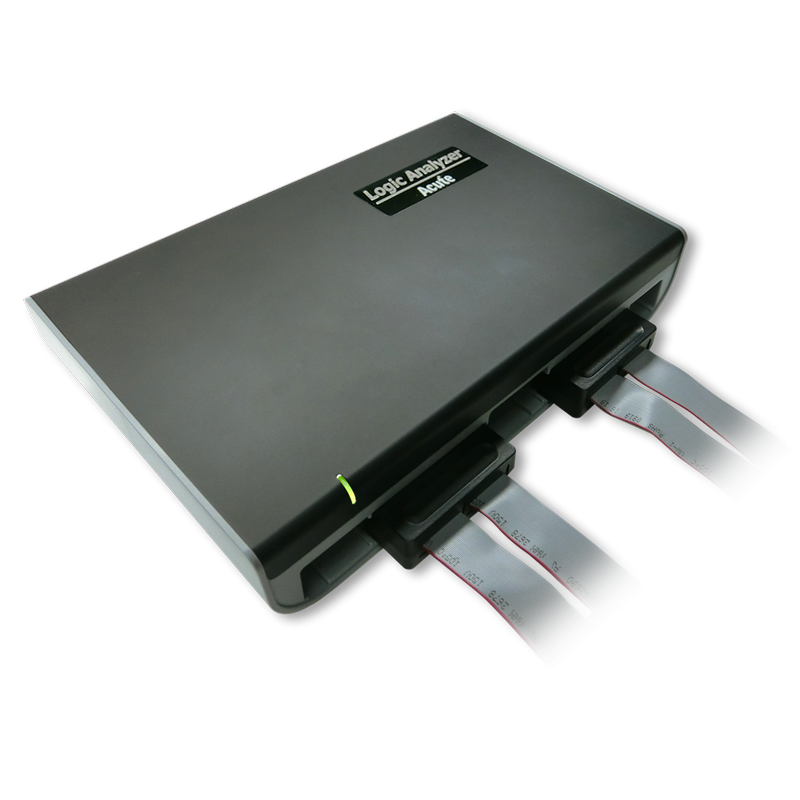
Pronto para analisar este protocolo?
Veja como os instrumentos Acute capturam e decodificam este protocolo em tempo real. Solicite uma demo ou entre em contato com nossa equipe.
Como analisar SGMII com instrumentos Acute
Conecte seu analisador lógico Acute aos pares diferenciais SGMII TX+/-, RX+/- usando sondas diferenciais apropriadas.
Conecte um fio terra a referência de terra da placa alvo.
No software Acute, selecione o SGMII protocol decoder e atribua os sinais diferenciais aos canais de entrada correspondentes.
Configure o decodificador para expected line rate and encoding.
Capture e visualize os SGMII data showing Ethernet frame content and in-band auto-negotiation status.