SGMII Protocolos compatibles
Computadoras y servidoresSerial Gigabit Media Independent Interface
¿Qué es SGMII?
SGMII (Serial Gigabit Media Independent Interface) is a serial alternative to GMII and RGMII for Gigabit Ethernet MAC-to-PHY connections. Originally defined by Cisco, SGMII uses a single differential pair in each direction (TX+/-, RX+/-) running at 1.25 Gbps with 8b/10b encoding. SGMII drastically reduces pin count to just 4 signal pins (plus optional reference clock), making it popular in switch ICs, SoCs, and multi-port Ethernet designs where routing many parallel data lines is impractical. Engineers debugging SGMII links need to verify the serial data encoding, auto-negotiation, and link status signaling that occurs in-band within the SGMII data stream.
SGMII Referencia rápida
| type | Serial, differential |
| signals | TX+/-, RX+/- |
| max Speed | 1.25 Gbps |
| voltage Range | Differential |
| standard | Cisco SGMII |
Instrumentos Acute compatibles con SGMII

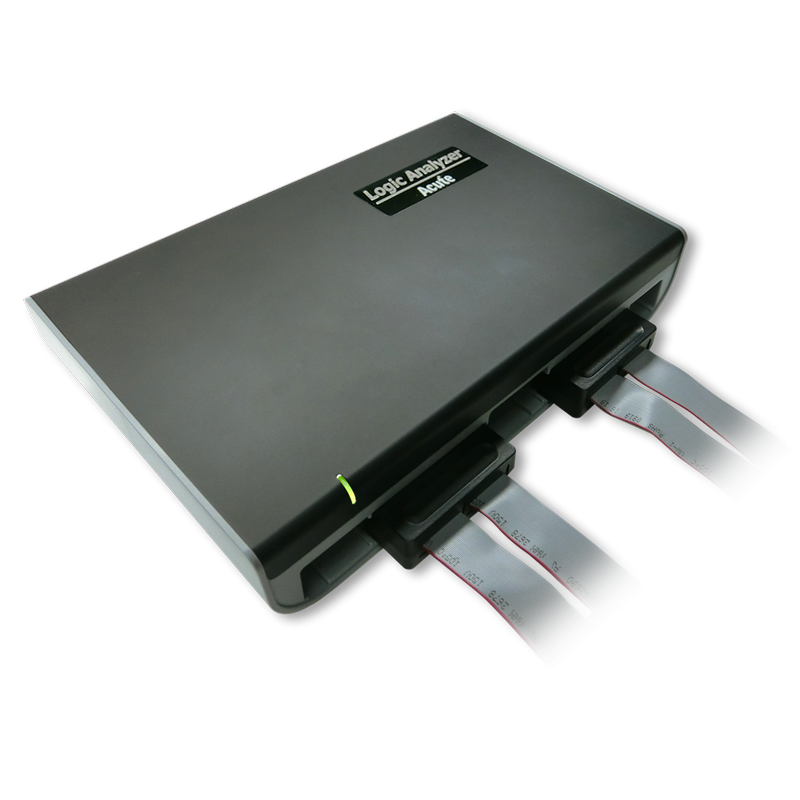
¿Listo para analizar este protocolo?
Vea cómo los instrumentos Acute capturan y decodifican este protocolo en tiempo real. Solicite una demo o contacte a nuestro equipo.
¿Cómo analizar SGMII con instrumentos Acute
Conecte su analizador lógico Acute a los pares diferenciales SGMII TX+/-, RX+/- usando sondas diferenciales apropiadas.
Conecte un cable de tierra a la referencia de tierra de la placa objetivo.
En el software Acute, seleccione el SGMII protocol decoder y asigne las señales diferenciales a los canales de entrada correspondientes.
Configure el decodificador para expected line rate and encoding.
Capture y visualice los SGMII data showing Ethernet frame content and in-band auto-negotiation status.