RGMII Protocolos compatibles
Computadoras y servidoresReduced Gigabit Media Independent Interface
¿Qué es RGMII?
RGMII (Reduced Gigabit Media Independent Interface) is the most widely used MAC-to-PHY interface for Gigabit Ethernet in embedded systems. RGMII achieves 1 Gbps throughput using only 12 signals by employing DDR (Double Data Rate) signaling — data is sampled on both the rising and falling edges of the 125 MHz clock. This makes RGMII timing-critical, as clock-to-data alignment must be maintained within tight margins. RGMII supports 10/100/1000 Mbps operation, with the clock frequency scaling accordingly. Engineers debugging Gigabit Ethernet frequently encounter RGMII timing issues including internal vs. external clock delay configuration, PCB trace length matching, and signal integrity problems at 125 MHz DDR rates.
RGMII Referencia rápida
| type | Parallel, DDR |
| signals | TXD[3:0], RXD[3:0], TX_CLK, RX_CLK, TX_CTL, RX_CTL |
| max Speed | 125 MHz DDR (1 Gbps) |
| voltage Range | 2.5V / 3.3V |
| standard | RGMII v2.0 |
Instrumentos Acute compatibles con RGMII
Soluciones recomendadas
Con canales analógicos
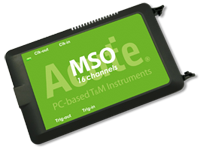
MSO2216B
Todos los productos compatibles
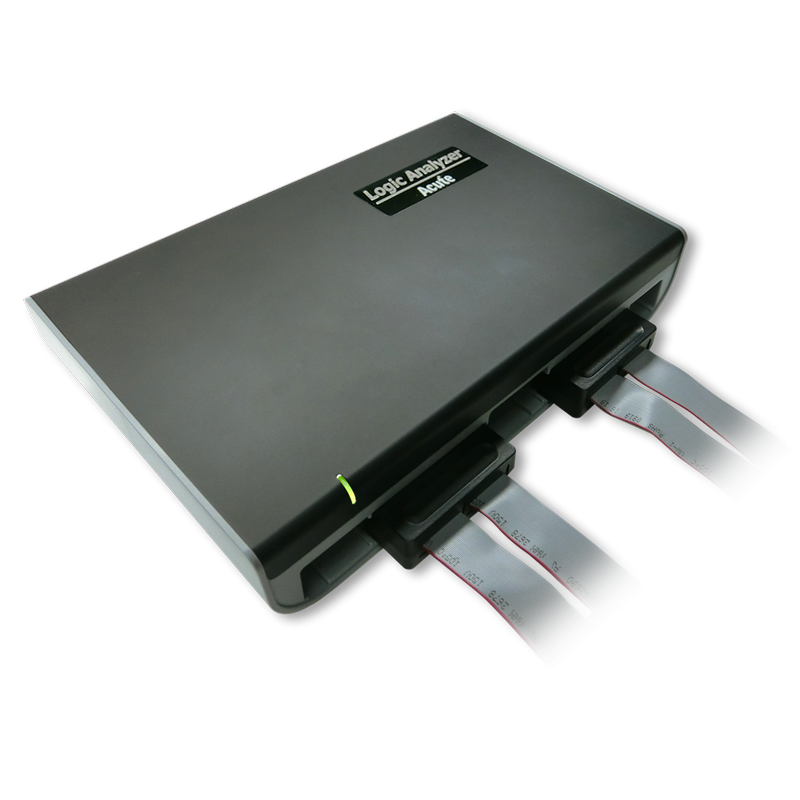
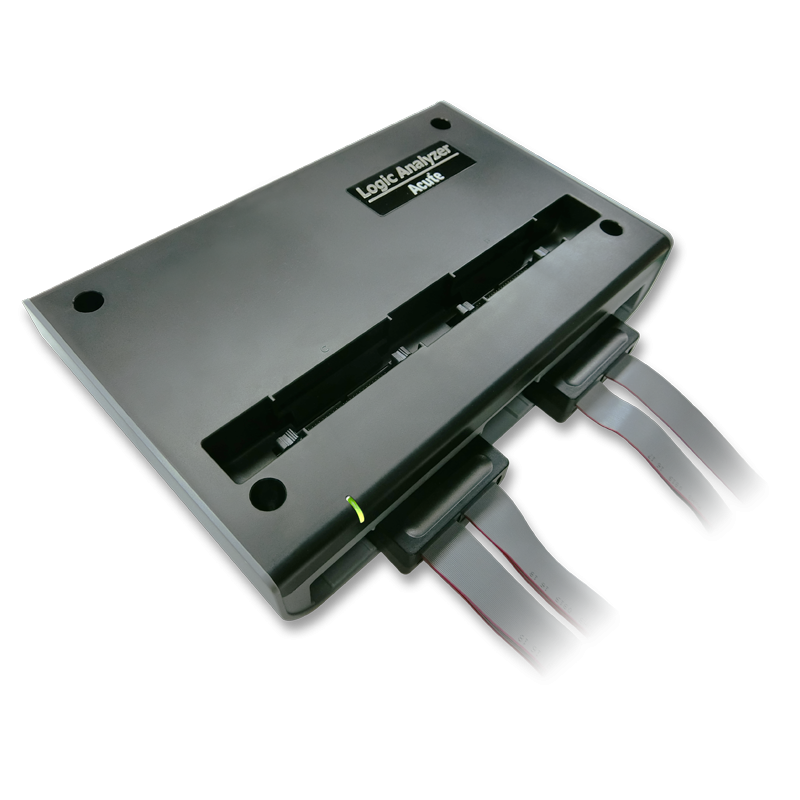
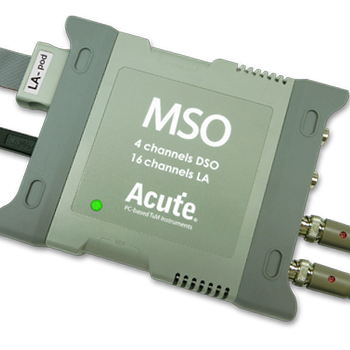
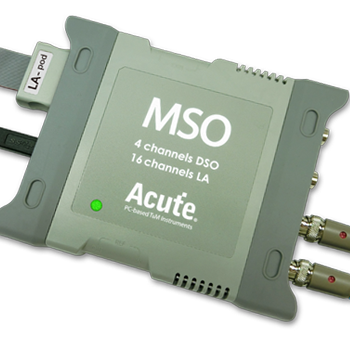

¿Listo para analizar este protocolo?
Vea cómo los instrumentos Acute capturan y decodifican este protocolo en tiempo real. Solicite una demo o contacte a nuestro equipo.
¿Cómo analizar RGMII con instrumentos Acute
Conecte su analizador lógico Acute a las señales RGMII: TXD[3:0], TX_CLK, TX_CTL, RXD[3:0], RX_CLK y RX_CTL.
Conecte un cable de tierra a la referencia de tierra de la placa objetivo.
En el software Acute, seleccione el RGMII protocol decoder y asigne cada señal al canal de entrada correspondiente.
Configure el decodificador para expected speed mode (1 Gbps DDR, 100 Mbps, or 10 Mbps).
Capture y visualice los Ethernet frames, and use timing analysis to verify clock-to-data alignment on both clock edges.