MII Protocolos compatibles
Computadoras y servidoresMedia Independent Interface
¿Qué es MII?
MII (Media Independent Interface) is the standard parallel interface between an Ethernet MAC controller and a PHY transceiver for 10/100 Mbps Ethernet. Defined in IEEE 802.3u, MII uses separate 4-bit-wide transmit and receive data paths, each with its own clock, plus control signals for carrier sense, collision detection, and data valid indication. MII operates at 2.5 MHz for 10 Mbps Ethernet and 25 MHz for 100 Mbps. Engineers debugging Ethernet connectivity at the hardware level use MII analysis to verify data framing, clock timing, and MAC-PHY communication during link establishment and packet transfer.
MII Referencia rápida
| type | Parallel |
| signals | TXD[3:0], RXD[3:0], TX_CLK, RX_CLK, etc. |
| max Speed | 25 MHz (100 Mbps) |
| voltage Range | 3.3V |
| standard | IEEE 802.3u |
Instrumentos Acute compatibles con MII
Soluciones recomendadas
Con canales analógicos
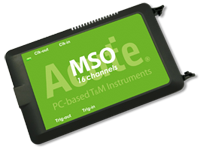
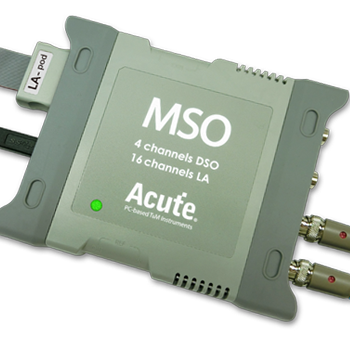
MSO2216B
Todos los productos compatibles
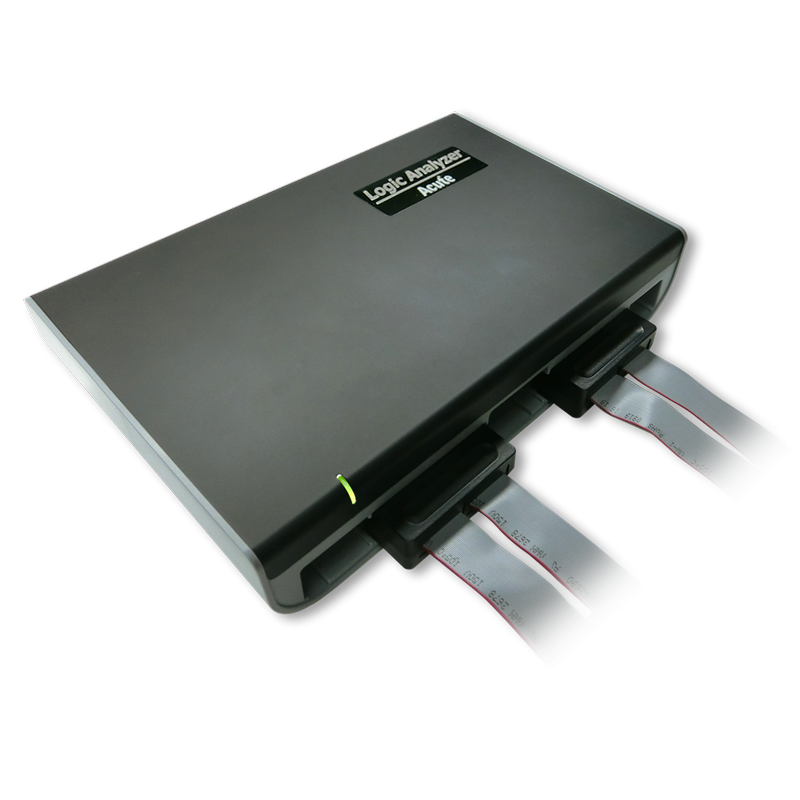
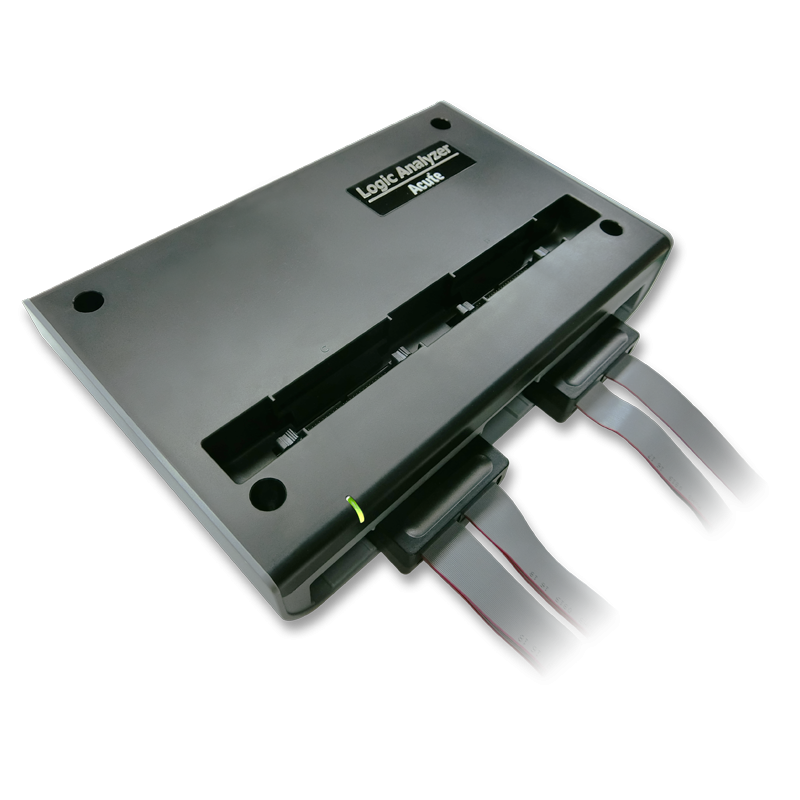
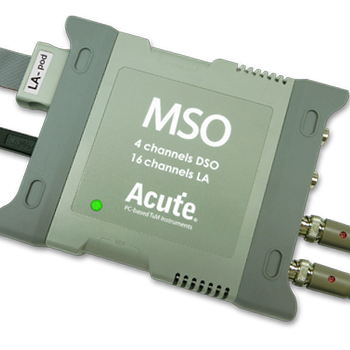

¿Listo para analizar este protocolo?
Vea cómo los instrumentos Acute capturan y decodifican este protocolo en tiempo real. Solicite una demo o contacte a nuestro equipo.
¿Cómo analizar MII con instrumentos Acute
Conecte su analizador lógico Acute a las señales MII: TXD[3:0], RXD[3:0], TX_CLK, RX_CLK, TX_EN, RX_DV y opcionalmente CRS y COL.
Conecte un cable de tierra a la referencia de tierra de la placa objetivo.
En el software Acute, seleccione el MII protocol decoder y asigne cada señal al canal de entrada correspondiente.
Configure los parametros esperados de Ethernet speed (10 Mbps or 100 Mbps).
Capture y visualice los Ethernet frames showing preamble, MAC addresses, EtherType, payload, and FCS for both transmit and receive directions.