MII Protocolos suportados
Computadores e servidoresMedia Independent Interface
O que é MII?
MII (Media Independent Interface) is the standard parallel interface between an Ethernet MAC controller and a PHY transceiver for 10/100 Mbps Ethernet. Defined in IEEE 802.3u, MII uses separate 4-bit-wide transmit and receive data paths, each with its own clock, plus control signals for carrier sense, collision detection, and data valid indication. MII operates at 2.5 MHz for 10 Mbps Ethernet and 25 MHz for 100 Mbps. Engineers debugging Ethernet connectivity at the hardware level use MII analysis to verify data framing, clock timing, and MAC-PHY communication during link establishment and packet transfer.
MII Referência rápida
| type | Parallel |
| signals | TXD[3:0], RXD[3:0], TX_CLK, RX_CLK, etc. |
| max Speed | 25 MHz (100 Mbps) |
| voltage Range | 3.3V |
| standard | IEEE 802.3u |
Instrumentos Acute compatíveis com MII
Soluções recomendadas
Com canais analógicos
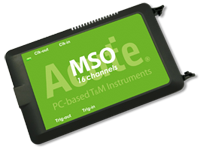
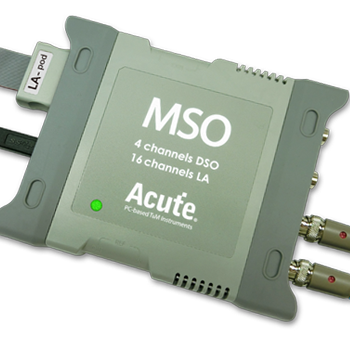
MSO2216B
Todos os produtos compatíveis

Pronto para analisar este protocolo?
Veja como os instrumentos Acute capturam e decodificam este protocolo em tempo real. Solicite uma demo ou entre em contato com nossa equipe.
Como analisar MII com instrumentos Acute
Conecte seu analisador lógico Acute aos sinais MII: TXD[3:0], RXD[3:0], TX_CLK, RX_CLK, TX_EN, RX_DV e opcionalmente CRS e COL.
Conecte um fio terra a referência de terra da placa alvo.
No software Acute, selecione o MII protocol decoder e atribua cada sinal ao canal de entrada correspondente.
Configure os parametros esperados de Ethernet speed (10 Mbps or 100 Mbps).
Capture e visualize os Ethernet frames showing preamble, MAC addresses, EtherType, payload, and FCS for both transmit and receive directions.