NAND Flash Protocolos suportados
ArmazenamentoParallel NAND Flash Interface
O que é NAND Flash?
Parallel NAND Flash is the raw interface used to communicate with NAND flash memory devices, providing direct access to the flash command set for read, program, erase, and status operations. The interface uses an 8-bit bidirectional data bus (IO[7:0]) along with control signals including CLE (Command Latch Enable), ALE (Address Latch Enable), WE# (Write Enable), RE# (Read Enable), and CE# (Chip Enable). Modern NAND flash devices conforming to ONFI 4.0 can operate at up to 200 MHz with DDR signaling. Engineers debugging embedded storage systems, SSD controllers, and NAND-based designs need parallel NAND analysis to verify command sequences, timing parameters, and data integrity at the flash interface level.
NAND Flash Referência rápida
| type | Parallel |
| signals | IO[7:0], CLE, ALE, WE, RE, CE |
| max Speed | 200 MHz (ONFI 4.0) |
| voltage Range | 1.8V / 3.3V |
| features | Raw NAND interface |
Instrumentos Acute compatíveis com NAND Flash
Soluções recomendadas

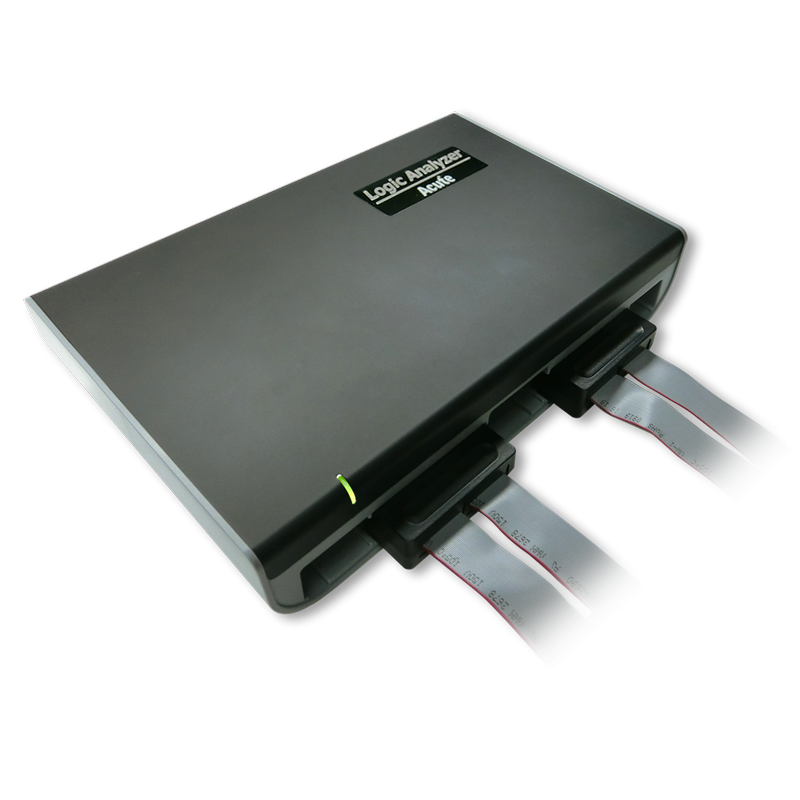
Todos os produtos compatíveis
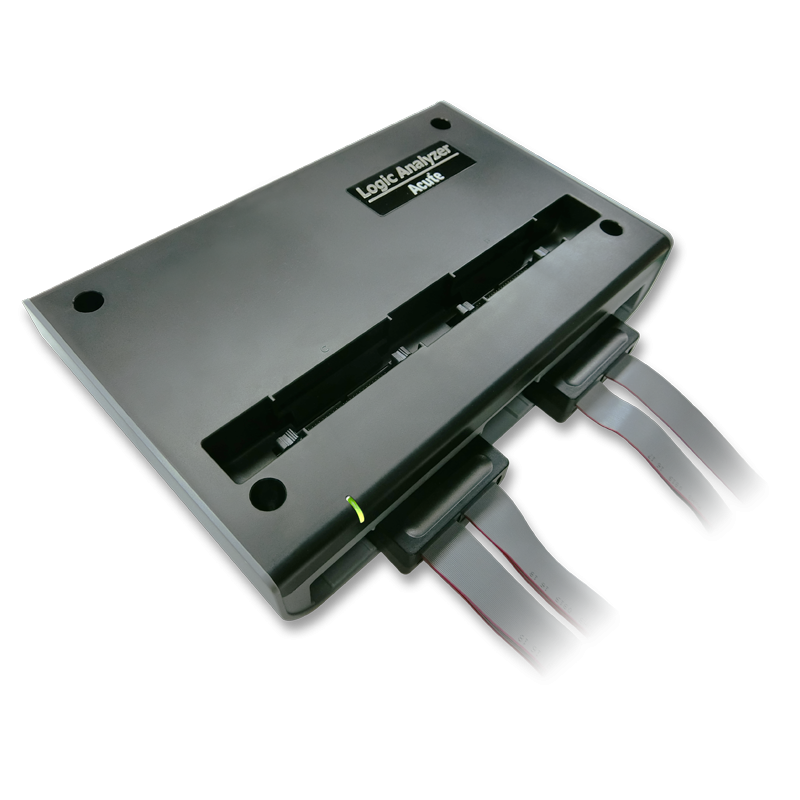
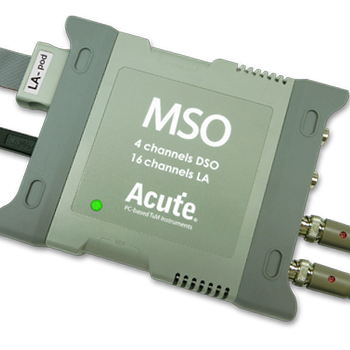
Pronto para analisar este protocolo?
Veja como os instrumentos Acute capturam e decodificam este protocolo em tempo real. Solicite uma demo ou entre em contato com nossa equipe.
Como analisar NAND Flash com instrumentos Acute
Conecte seu analisador lógico Acute aos sinais NAND flash: IO[7:0], CLE, ALE, WE#, RE#, CE# e opcionalmente R/B# (Ready/Busy).
Conecte um fio terra a referência de terra da placa alvo.
No software Acute, selecione o NAND Flash protocol decoder e atribua cada sinal ao canal de entrada correspondente.
Configure o decodificador para NAND device type, addressing mode, and interface speed.
Capture e visualize os NAND commands, addresses, and data showing read, program, erase operations, and status responses.