PDM Protocolos suportados
ÁudioPulse Density Modulation
O que é PDM?
PDM (Pulse Density Modulation) is a single-bit digital áudio encoding used primarily as the output format for MEMS digital microphones. A PDM stream consists of a clock signal (CLK) driven by the host and a data signal (DATA) driven by the microphone, where the density of logic-high pulses represents the instantaneous amplitude of the áudio signal. PDM microphones are found in smartphones, laptops, smart speakers, hearing aids, and IoT devices due to their small size and simple two-wire interface. Engineers debugging PDM interfaces need to verify clock frequency accuracy, confirm left/right channel selection via clock edge assignment, and validate that the pulse density pattern corresponds to the expected áudio input.
PDM Referência rápida
| type | Serial, synchronous |
| signals | CLK, DATA |
| max Speed | Up to 4.8 MHz |
| voltage Range | 1.8V – 3.3V |
| features | Digital microphone interface |
Instrumentos Acute compatíveis com PDM
Soluções recomendadas
Recomendado para decodificação
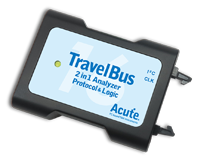
TB3016F
only decode
Com canais analógicos
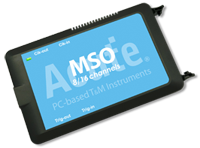
MSO2116E
only decode
Com validação elétrica
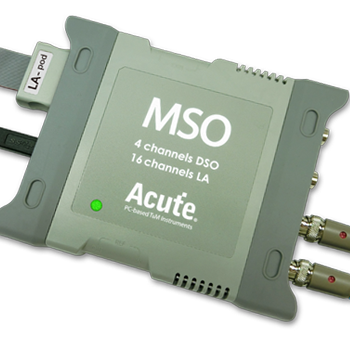
MSO3124V
Todos os produtos compatíveis
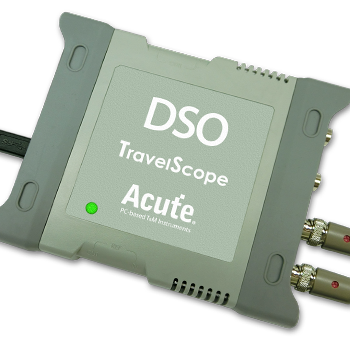
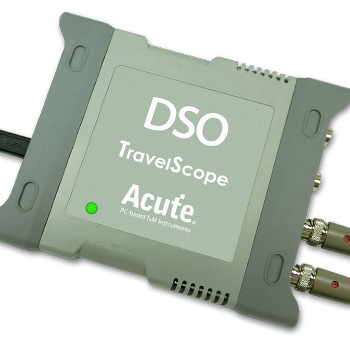
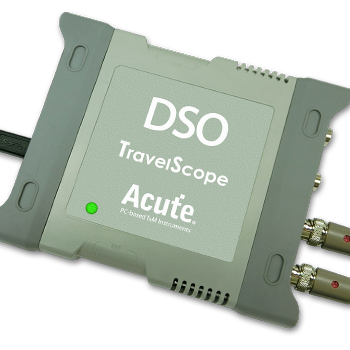
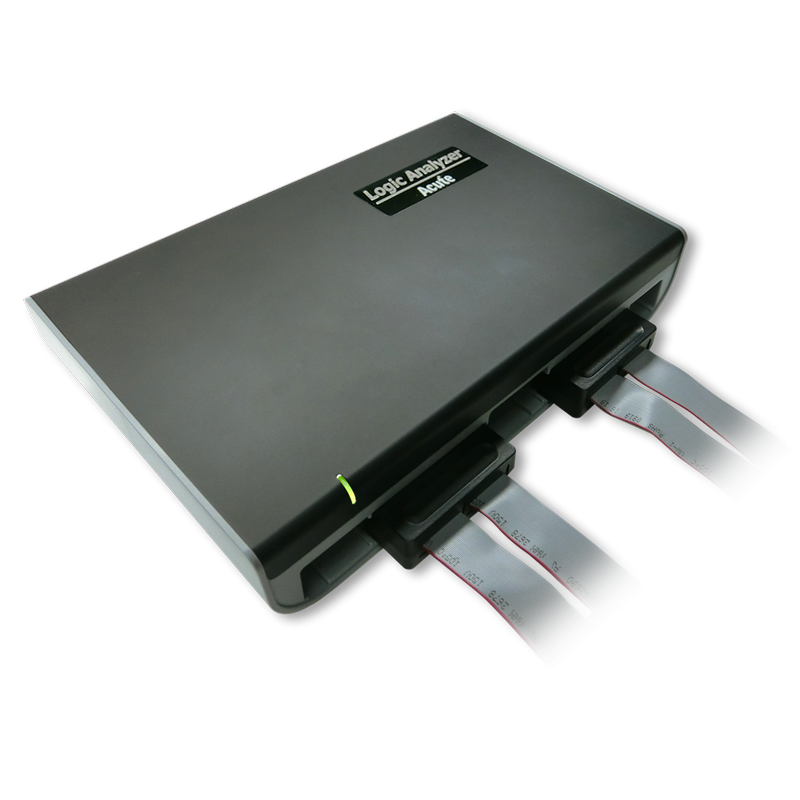
Famílias de produtos compatíveis
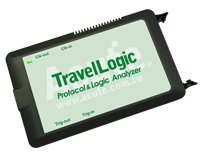
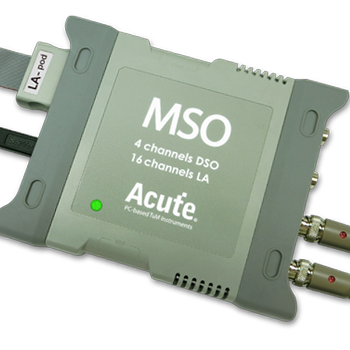
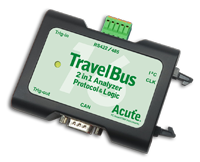
Pronto para analisar este protocolo?
Veja como os instrumentos Acute capturam e decodificam este protocolo em tempo real. Solicite uma demo ou entre em contato com nossa equipe.
Como analisar PDM com instrumentos Acute
Conecte seu analisador lógico Acute as linhas PDM CLK e DATA no microfone ou codec.
Conecte um fio terra a referência de terra da placa alvo.
No software Acute, selecione o PDM protocol decoder e atribua CLK e DATA aos canais de entrada correspondentes.
Configure os parametros esperados de clock frequency and channel mapping (left on rising edge, right on falling edge, or vice versa).
Capture o trafego e visualize o PDM bitstream, verifying clock timing and data alignment for each áudio channel.