eSPI Protocol Support
Computers & ServersEnhanced Serial Peripheral Interface
What is eSPI?
eSPI (Enhanced Serial Peripheral Interface) is a serial bus interface developed by Intel as a replacement for the legacy LPC (Low Pin Count) bus in PC platforms. eSPI connects the Platform Controller Hub (PCH) to peripheral devices such as embedded controllers (EC), Super I/O chips, TPM modules, and BMC (Baseboard Management Controller) chips. The protocol uses a reduced pin count compared to LPC — requiring only CS#, CLK, and 1, 2, or 4 I/O data lines — while providing significantly higher throughput with clock speeds up to 66 MHz and support for single, dual, and quad I/O modes. eSPI defines four communication channels: peripheral (memory and I/O mapped access), virtual wire (GPIO and interrupt signaling), OOB (Out-of-Band) messaging for SMBus tunneling, and flash access for sharing SPI flash between the PCH and EC. The protocol uses a command-response architecture with alert signaling to indicate that a peripheral needs attention. Protocol analysis is critical for eSPI because the multi-channel, multi-mode nature of the bus makes issues difficult to debug without full traffic visibility. Engineers developing embedded controllers, BIOS/firmware, and platform management systems need to verify eSPI initialization sequences, channel configurations, virtual wire signaling, and flash sharing operations. Timing violations and configuration errors can prevent platforms from booting entirely.
eSPI Quick Reference
| type | Serial, synchronous |
| signals | CLK, CS, IO0-3 |
| max Speed | 66 MHz |
| voltage Range | 1.8V |
| features | Quad I/O, Intel platform bus |

Ready to analyze this protocol?
See how Acute instruments capture and decode this protocol in real time. Request a demo or contact our team.
How to Analyze eSPI with Acute Instruments
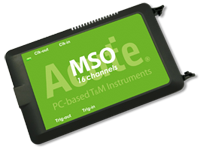
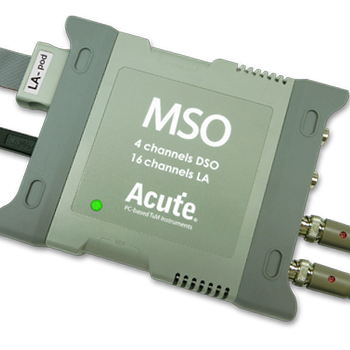
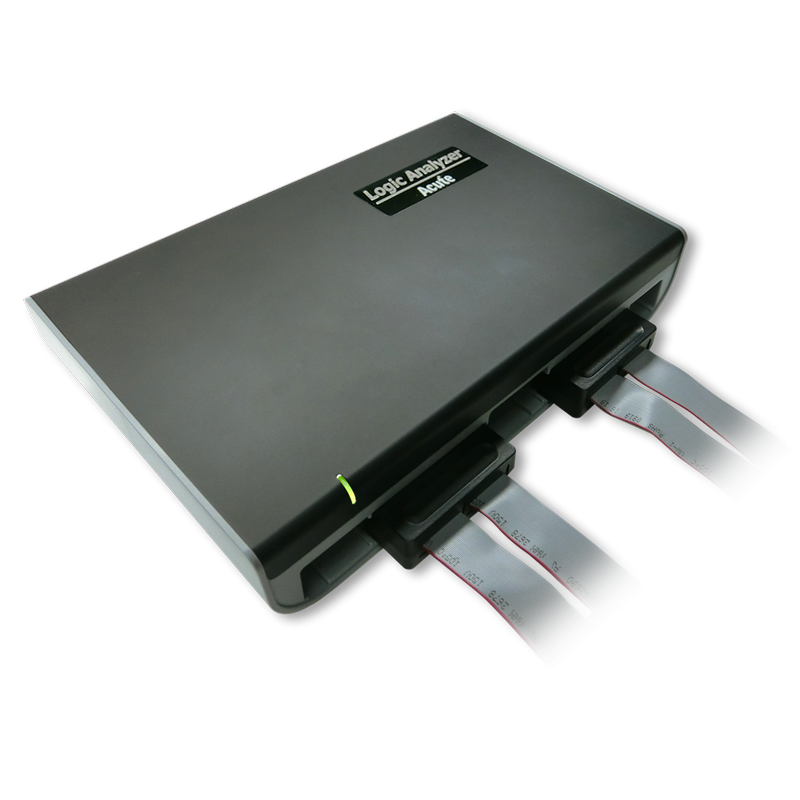
Connect your Acute logic analyzer to the eSPI signals: CS#, CLK, IO0-IO3 (depending on bus width), ALERT#, and RESET#.
Attach a ground lead to the platform board's ground reference.
In the Acute software, select the eSPI protocol decoder and assign each signal to the correct channel.
Configure the I/O mode (single, dual, or quad) and clock frequency to match the platform configuration.
Capture and view decoded eSPI transactions showing command opcodes, cycle types, addresses, data payloads, virtual wire states, and completion status for all four eSPI channels.
Related Articles
How to Choose the Right Logic Analyzer for Your Project
A practical decision guide for selecting the right Acute logic analyzer or MSO by channel count, sample rate, protocol decode, and portability requirements.
eSPI Bus Analysis for Intel Platform Validation
How to capture and analyze eSPI (Enhanced Serial Peripheral Interface) bus traffic for Intel platform bring-up, EC firmware debugging, and system validation.