TDM Protocol Support
AudioTime Division Multiplexing
What is TDM?
TDM (Time Division Multiplexing) is a multi-channel audio transport scheme that carries multiple audio channels on a single serial data line by assigning each channel to a specific time slot within a repeating frame. TDM is used in professional audio systems, telecommunications equipment, audio DSP arrays, and multi-codec architectures where more than two audio channels must share a bus. The interface typically uses CLK, SYNC (frame sync), and one or more DATA lines, with frame sizes ranging from 2 to 32 or more time slots. Engineers debugging TDM buses need to verify time-slot assignments, frame sync alignment, clock accuracy, and data integrity across all active channels.
TDM Quick Reference
| type | Serial, synchronous |
| signals | CLK, SYNC, DATA |
| max Speed | Up to 24.576 MHz |
| voltage Range | 1.8V – 3.3V |
| features | Multi-channel audio |
Acute Instruments Supporting TDM
Recommended Solutions
Recommended for Decode
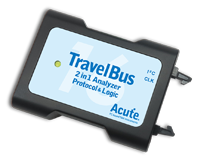
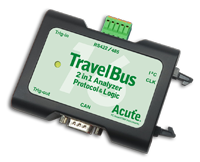
TB3016F
only decode
With Analog Channels
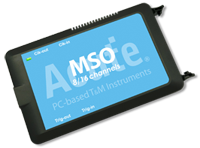
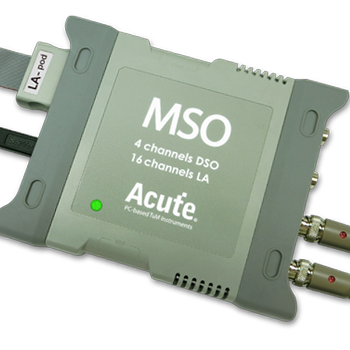
MSO2116E
only decode
All Supporting Products
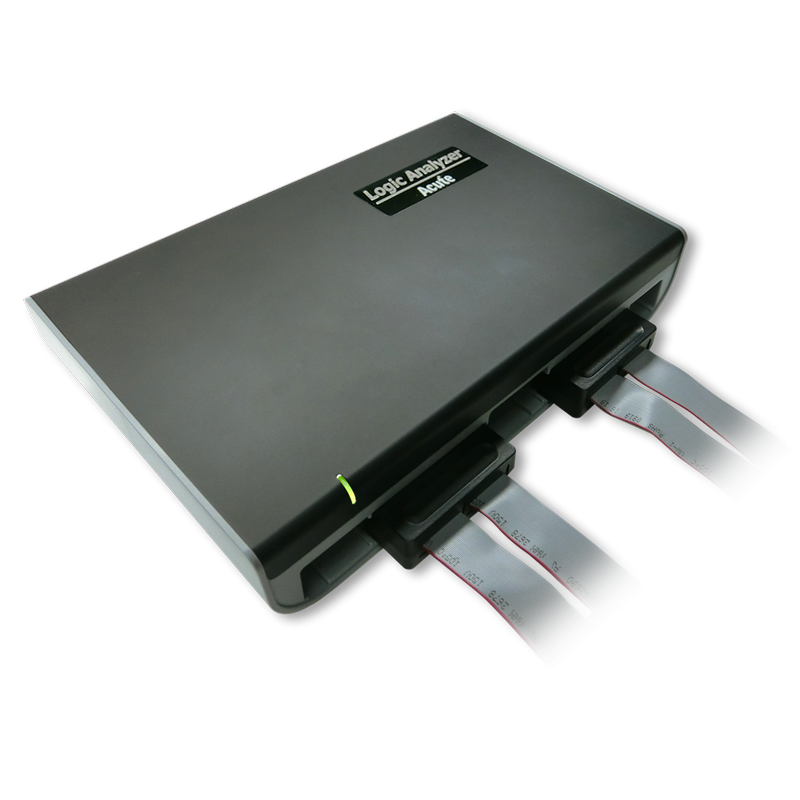
Ready to analyze this protocol?
See how Acute instruments capture and decode this protocol in real time. Request a demo or contact our team.
How to Analyze TDM with Acute Instruments
Connect your Acute logic analyzer to the TDM CLK, SYNC, and DATA lines.
Attach a ground lead to the target board's ground reference.
In the Acute software, select the TDM protocol decoder and assign each signal to the correct input channel.
Configure the number of time slots per frame, bit depth per slot, and frame sync polarity.
Capture and view decoded audio data for each time slot, verifying correct channel-to-slot mapping and frame alignment.