Serial NOR Flash Protocol Support
StorageSerial NOR Flash (SPI Flash)
What is Serial NOR Flash?
Serial NOR Flash (commonly called SPI Flash) is the dominant non-volatile storage technology for firmware, boot code, and configuration data in embedded systems. These devices communicate over a standard SPI interface (CLK, CS#, MOSI/IO0, MISO/IO1), with many modern devices also supporting Dual SPI and Quad SPI modes for higher throughput. Serial NOR flash is used as the boot ROM in virtually every computing platform — from microcontrollers to servers — storing BIOS/UEFI firmware, FPGA bitstreams, and application code. Engineers debugging boot failures, firmware corruption, and flash programming issues need to decode the flash command set including read, page program, sector erase, status register operations, and SFDP (Serial Flash Discoverable Parameters) queries.
Serial NOR Flash Quick Reference
| type | Serial, synchronous |
| signals | CLK, CS, MOSI, MISO |
| max Speed | 133 MHz |
| voltage Range | 1.8V – 3.3V |
| features | Boot flash, firmware storage |
Acute Instruments Supporting Serial NOR Flash
Recommended Solutions
Recommended for Decode

TL4234B
Recommended for Decode
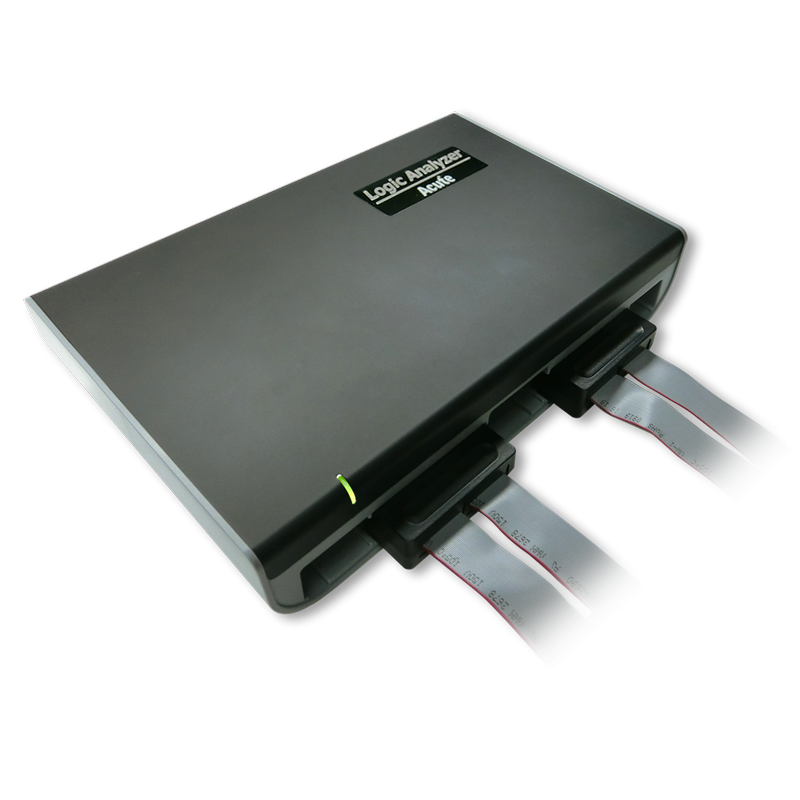
LA4068B
for Octal mode
All Supporting Products
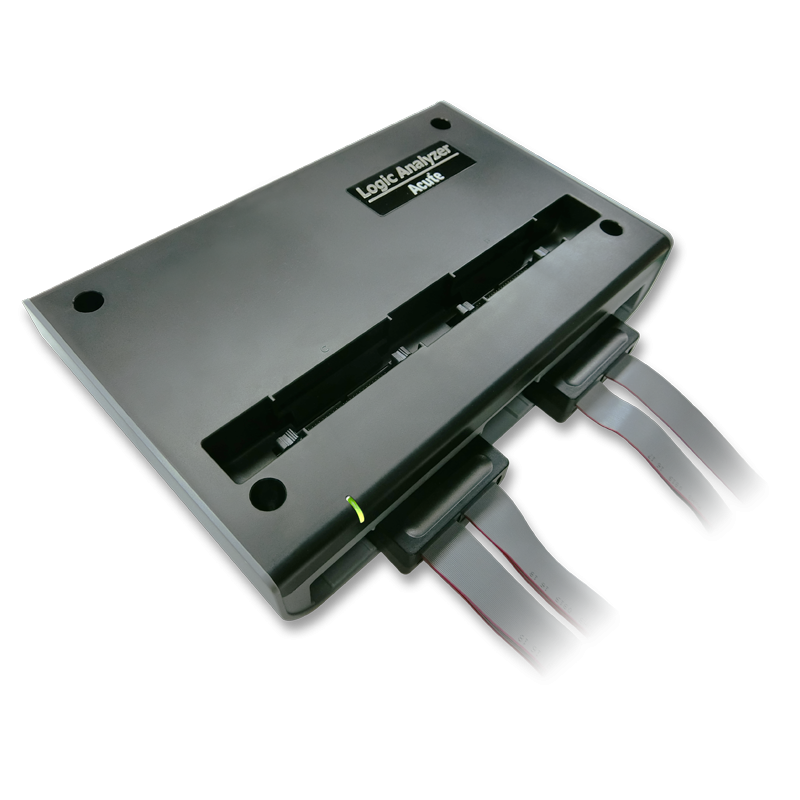
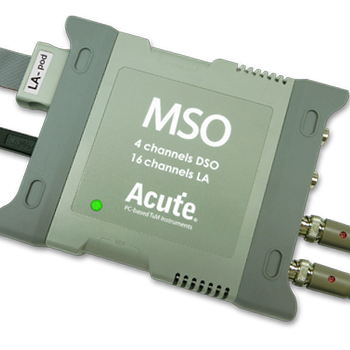
Ready to analyze this protocol?
See how Acute instruments capture and decode this protocol in real time. Request a demo or contact our team.
How to Analyze Serial NOR Flash with Acute Instruments
Connect your Acute logic analyzer to the serial NOR flash signals: CLK, CS#, MOSI (IO0), and MISO (IO1). For Quad mode, also connect IO2 and IO
Attach a ground lead to the target board's ground reference.
In the Acute software, select the Serial NOR Flash protocol decoder and assign each signal to the correct input channel.
Configure the flash manufacturer and part number (or set generic SPI flash mode) for correct command interpretation.
Capture and view decoded flash commands showing opcodes, addresses, data bytes, and status register reads for each SPI transaction.